Winter style can get dull fast when every coat has the same straight cut, same safe length, and same stiff outline. That is why asymmetric hem coats feel fresh for American wardrobes that need warmth without losing shape, movement, or personality. A coat with an uneven hem does something a standard wool layer rarely does: it changes the whole rhythm of an outfit before you add a single accessory.
The appeal is not only about being bold. It is about balance. A slanted front, longer back, diagonal edge, or waterfall side line can make jeans look styled, make boots feel intentional, and make a basic knit dress look sharper. For readers following practical fashion coverage through modern style updates, this is the kind of winter piece that proves outerwear does not have to sit quietly on top of everything else.
Across the USA, winter dressing has to handle more than one reality. A woman in Chicago needs insulation. Someone in Denver needs layering space. A New Yorker needs a coat that can survive sidewalks, subways, and dinner after work. Shape matters in all those places.
Why Asymmetric Hem Coats Change the Shape of Winter Style
Straight winter coats are reliable, but they can flatten an outfit. They often create one heavy block from shoulder to knee, which works for warmth but can hide the styling underneath. A coat with an uneven hem breaks that block. It gives the eye a direction to follow, which makes even simple winter pieces feel more alive.
How Uneven Hems Create Better Movement
A diagonal hem can make a coat feel lighter even when the fabric is thick. The eye does not stop at one stiff horizontal line, so the outfit feels less boxed in. That matters during winter, when most people already wear bulkier layers.
This movement becomes clear with everyday outfits. A black turtleneck, dark denim, and ankle boots can look plain under a basic coat. Add a coat with a longer back and shorter front, and the outfit suddenly has shape. Nothing dramatic happened. The cut did the work.
The strongest designs do not scream for attention. They shift the silhouette enough to make the outfit feel chosen, not thrown together. That small difference is why uneven hems have moved beyond runway styling and into wearable cold-weather wardrobes.
Why Proportion Matters More Than Trend
A dynamic hem only works when the coat respects the body underneath it. If the shortest point hits too high, the coat can look chopped. If the longest point drags too low, it can swallow the frame. The best version creates contrast without making the wearer fight the garment.
Petite women often do better with soft diagonal hems that fall around the knee or upper calf. Taller women can carry longer back panels, dramatic side drops, and layered waterfall shapes. Curvy bodies often benefit from hems that skim rather than flare hard from the waist.
Here is the honest part: not every dramatic coat is stylish. Some look like fabric trying too hard. The winning coat has movement, structure, and restraint working together.
Asymmetric Hem Coats for Real American Winter Outfits
A winter coat has to live in the real world. It has to work over sweaters, handle cold mornings, and still look good when the rest of the outfit is simple. Asymmetric hem coats succeed when they make daily dressing easier, not harder.
What Works With Jeans, Boots, and Knitwear
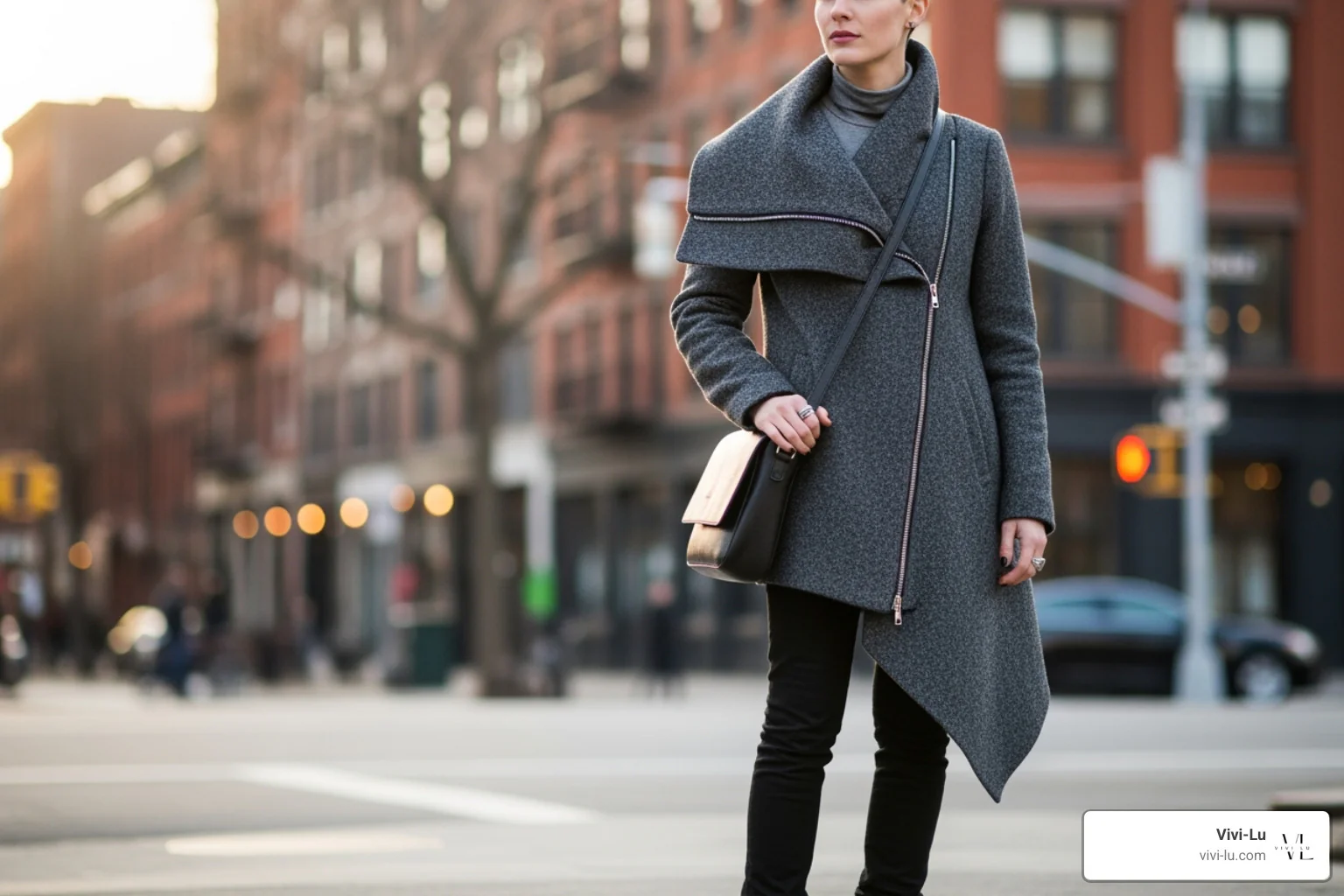
Jeans are the easiest test. If a coat works with denim, it will likely earn its place in a closet. A charcoal coat with a slanted hem can turn straight-leg jeans and Chelsea boots into something polished enough for lunch, errands, or a casual office.
Knitwear adds another layer of texture. Ribbed sweaters, cable knits, and fine merino tops all pair well with uneven hems because the coat adds structure while the knit keeps the outfit soft. That contrast is where winter style starts to feel personal.
Boots matter too. Knee-high boots work well with coats that open slightly in front. Ankle boots pair better with coats that land above the calf. Snow boots can still work, but the coat needs cleaner lines so the outfit does not become too heavy from top to bottom.
How to Wear Them Without Looking Overstyled
The easiest mistake is adding too many statement pieces at once. A coat with an uneven hem already has movement, so the rest of the outfit should give it room. Clean pants, simple sweaters, and one strong accessory usually work better than layered drama.
A good rule is to let one line lead. If the coat has a sharp diagonal hem, keep scarves soft and simple. If the coat has a flowing waterfall edge, choose structured boots or a clean leather bag. Opposites create balance.
For example, a cream asymmetrical wool coat over black ponte pants and brown leather boots can look expensive without feeling stiff. Add oversized sunglasses or a textured tote, and the outfit feels finished. Add a loud scarf, patterned tights, and a giant belt, and the coat starts competing with everything.
Choosing Fabrics, Lengths, and Details That Actually Work
The cut gets attention first, but fabric decides whether the coat looks refined or messy. Winter outerwear needs enough weight to hold its shape. An uneven hem made from weak fabric can collapse, curl, or twist after a few wears. That ruins the point.
Wool, Blends, and Quilted Finishes
Wool and wool-blend coats usually give the cleanest result. They hold diagonal lines well and make the hem feel intentional. A wool blend can also keep the price more realistic, which matters when you want style without treating the coat like a museum piece.
Quilted versions bring a different mood. They feel sportier and often work well in colder parts of the USA where insulation matters. A quilted coat with an angled hem can look modern with leggings, snow-ready boots, and a fitted thermal top.
The surprise is that softer fabrics can work too, but only when the design is relaxed on purpose. A brushed wrap coat with a waterfall hem can look graceful, while a thin synthetic coat with the same idea may look flimsy. Fabric tells the truth fast.
Small Design Details That Make the Coat Look Expensive
Closures make a bigger difference than most shoppers realize. Hidden snaps, clean buttons, and a strong belt can keep the coat looking sharp. Cheap zippers or awkward toggles can make even a good hem look careless.
Seams also matter. A diagonal hem should connect naturally with the coat’s front panels, pockets, and lapels. When those lines fight each other, the eye notices the confusion even if the shopper cannot name the problem.
Pockets deserve attention too. Oversized patch pockets can add charm, but they may widen the coat. Slit pockets keep the silhouette cleaner. A coat that looks great but has useless pockets is not built for winter life, especially when gloves, keys, and phones are part of the daily routine.
Styling Dynamic Winter Coats With Confidence
A coat with an uneven hem asks for confidence, but it should not demand a completely new wardrobe. The best styling comes from pairing the coat with pieces you already wear, then tightening the proportions so everything feels deliberate.
How Color Changes the Mood
Black makes the shape sharper. Camel makes it softer. Gray feels urban and easy. Cream looks elegant but needs more care, especially in slush-heavy cities. Deep green, burgundy, and navy can give the coat personality without turning it into a seasonal costume.
Color also affects how visible the hem looks. A black coat with a diagonal edge may feel subtle unless paired with lighter pants or boots. A camel coat shows the cut more clearly, especially over dark denim or black knitwear.
The safest choice is not always the smartest one. If your closet is already full of black winter basics, a warm brown or heather gray coat may work harder. It gives contrast without forcing you into bright color.
When to Dress It Up or Keep It Casual
For work, keep the lines clean. Tailored trousers, a fine knit top, leather boots, and a structured bag make the coat look intentional. The hem adds interest without making the outfit feel distracting.
For weekends, relax the base layer. Straight jeans, a soft hoodie, and lug-sole boots can work if the coat has enough structure. This mix feels modern because it does not treat the coat as precious.
Evening styling needs less effort than people think. A slip skirt, fitted sweater, and heeled boots can sit beautifully under an uneven coat. The goal is not to hide the outfit beneath the outerwear. The goal is to let the coat become part of the outfit’s architecture.
Conclusion
Winter fashion gets better when outerwear stops acting like an afterthought. A coat is the first thing people see, the piece you wear most often, and the layer that decides whether an outfit feels flat or finished. That is why shape matters so much.
The smartest move is to choose asymmetric hem coats with enough structure for daily wear and enough movement to make simple outfits feel styled. Look for fabric that holds the line, a length that suits your frame, and details that support the cut instead of fighting it.
Trends come and go, but proportion always matters. A strong coat can make denim sharper, knitwear cleaner, boots more intentional, and winter dressing less repetitive. Start with one coat that changes your silhouette in a way you can wear often, then build the rest of your cold-weather wardrobe around that energy.
Choose the coat that makes your everyday winter outfits look awake.
Frequently Asked Questions
Are asymmetric hem coats good for everyday winter wear?
Yes, they can work well for daily outfits when the fabric has enough weight and the hem is not too extreme. Wool blends, quilted styles, and structured wrap coats are the easiest choices for errands, workdays, dinners, and casual weekends.
What body type looks best in an asymmetric hem coat?
Most body types can wear this style when the length is right. Petite frames often look better in softer diagonal hems, while taller frames can handle longer drops. Curvy figures usually benefit from clean lines that skim instead of adding bulk.
Can asymmetric winter coats be worn with dresses?
Yes, they pair well with sweater dresses, knit midi dresses, and slip dresses layered for cold weather. The key is keeping the dress hem either clearly shorter or clearly longer than the coat so the outfit looks intentional.
What shoes look best with asymmetric hem coats?
Ankle boots, knee-high boots, loafers, and sleek winter boots all work depending on the coat length. A sharper coat usually pairs best with clean footwear, while relaxed waterfall hems can handle softer or chunkier shoe shapes.
Are asymmetric hem coats still professional enough for work?
They can look professional when the cut is controlled and the color is neutral. Black, camel, gray, navy, and deep brown styles pair well with trousers, pencil skirts, fine sweaters, and structured handbags for office settings.
How do I style an asymmetric coat casually?
Wear it with straight jeans, a fitted knit top, and ankle boots for an easy casual look. A hoodie can also work under a structured coat, but keep the rest of the outfit clean so the hem remains the main design feature.
What colors are safest for a first asymmetric coat?
Camel, black, gray, navy, and cream are the safest choices because they work with most winter wardrobes. Camel and gray often show the hem shape better than black, while black gives the coat a sharper, more understated feel.
Do asymmetric hem coats go out of style quickly?
The extreme versions may date faster, but balanced designs last longer. A coat with a clean diagonal hem, strong fabric, and minimal detailing feels more like a modern outerwear shape than a short-lived trend.